
How sash window double glazing works
From the first enquiry to the last coat of paint — what happens, in what order, and what you need to do.
Request a quote
Before the work
1. Enquiry
A count of the windows, their style and your postcode is enough to start. Photographs from outside help with shaped or unusual windows. If the house is listed or in a conservation area, say so — it changes the paperwork, not the method.
2. Survey
Every window is measured pane by pane, because every unit is made to size. The surveyor checks the sashes for rot and loose joints, the box frames for the state of the pulleys and pockets, the sills, and how each window is going to come out and go back — a first-floor sash above a conservatory needs a different plan from one at ground level. Templates are taken for any shaped panes.
3. Quote
Itemised per window: glazing, timber repairs, seals, cords and weights, finishing. You can take the whole scope or part of it — some owners reglaze the street elevation first and the rest later. Nothing is ordered until the quote is accepted.
4. Glass on order
Vacuum units are manufactured to the survey dimensions and take roughly four to six weeks to arrive. The fitting date is booked for after delivery, so the sashes are only ever out on the day they are reglazed.
On the day
Sashes out
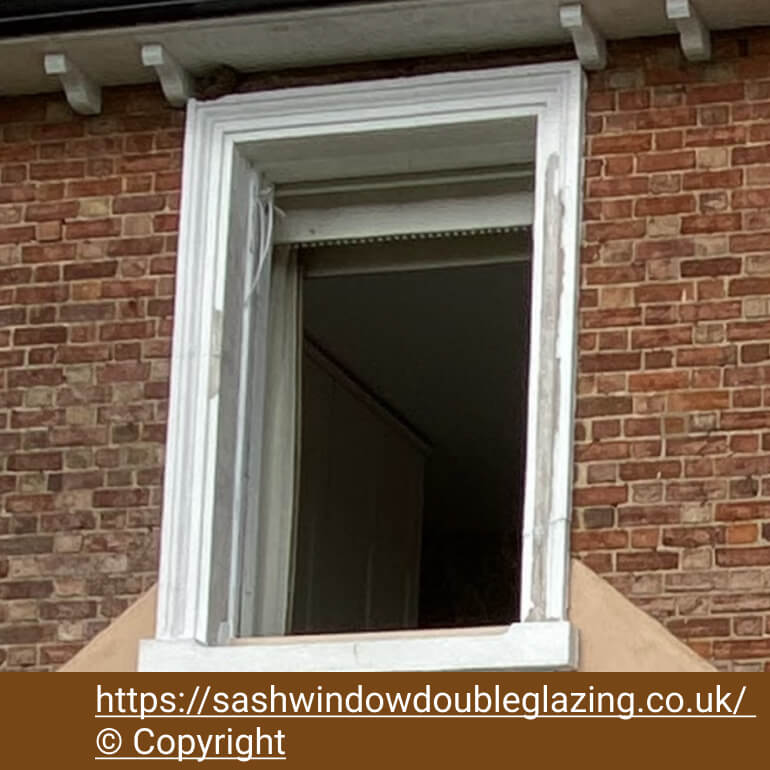
The staff beads come off, the sashes are unhooked from their cords and lifted out through the opening. They go to the mobile workshop outside the house; the box frame stays put and the opening is covered if the weather needs it.
Inside, the only requirement is a clear metre in front of each window and curtains or blinds moved out of the way.
On the bench
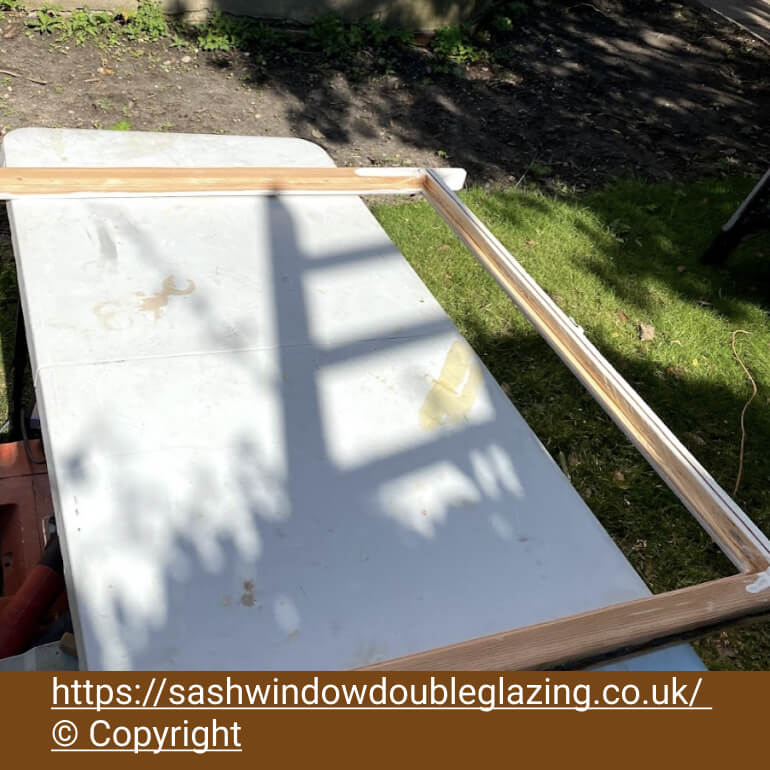
Old putty and glass out. The exterior rebate is deepened with a router to take the thicker unit, keeping the sightline of the glazing bars. Loose joints are re-glued and pinned, rot cut out and spliced with new timber, and old paint stripped back where it has failed. Grooves are cut for the draught seals.
Glazed and back in
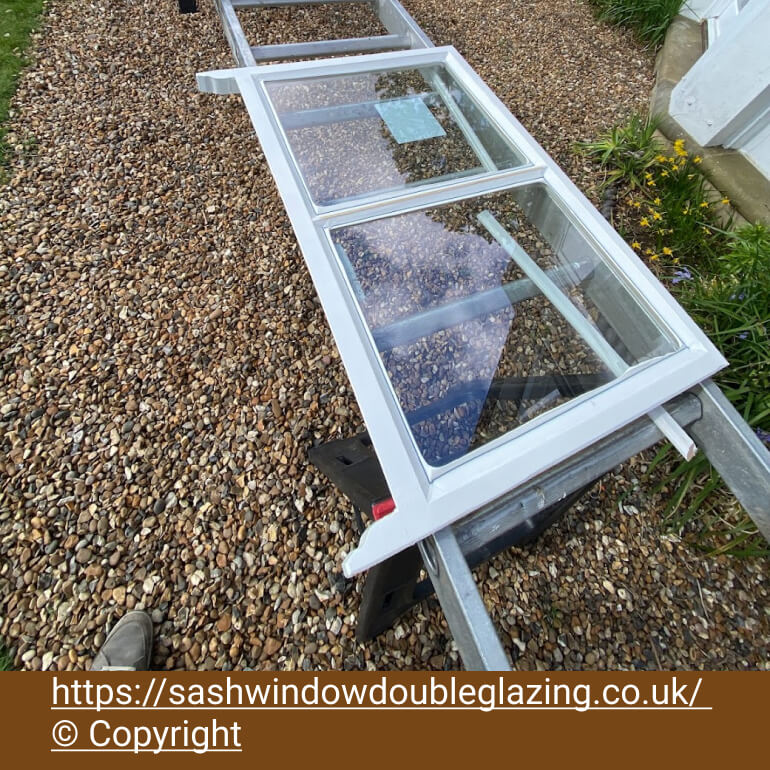
The vacuum unit is bedded, wedged and puttied from the outside. Seals go into their grooves. The sash is re-hung on new cords with extra weight added in the box to match the heavier glass, the beads go back and the window is tested. Every sash taken out in the morning is back in by the evening.
After the glass is in
Finishing
New putty needs a few days to skin before it takes paint. The exterior is primed and painted once it has; the interior is made good where the work disturbed it. Windows can be used as soon as they are back in the frame — just avoid pressure-washing the outside for a few weeks while putty and paint harden.
What you should notice
Glass that is not cold to the touch. Sashes that close against seals with a soft stop instead of a rattle. A room that is quieter than the street. And, in the first winter, far less condensation running down the glass in the morning.
How many windows a day?
It depends on size, glazing bars and condition. Plain one-over-one Victorian sashes go faster than six-over-six Georgian ones with rot in the bottom rails. The survey sets a realistic programme and the team works through the house in the order agreed — usually the rooms you use least first.
Access and parking
The workshop is a van with benches, so a parking space close to the house matters, particularly on London streets with permits. Upper-floor windows are handled from inside where possible; where a sash cannot be brought in, ladder or tower access is arranged and priced at the survey.
Ready for a survey?
Send the window count and postcode. The survey is the point at which every question about your particular windows gets a specific answer.