
Slimline double glazing for period sash windows
Vacuum insulated glazing: two panes and a vacuum, under 7 mm overall, fitted into the sashes you already have.
Request a quote
What a vacuum unit is
A conventional double-glazed unit keeps heat in with a wide gap of dry air or argon between two panes — which is why it is 24–28 mm thick and why it will not fit a sash made for a single 3 mm pane. A vacuum unit takes the air out of the gap instead. With almost nothing between the panes to carry heat, the gap can be a fraction of a millimetre wide, and the whole unit ends up thinner than the putty line on many old windows.
A vacuum insulated glazing unit is two panes of low-emissivity glass, a vacuum gap, a grid of tiny support pillars to keep the panes apart under atmospheric pressure, and a sealed edge; current units have no visible evacuation port. Published centre-of-glass U-values are around 0.7 W/m²K, against 5.8 for single glazing — roughly eight times less heat through the glass — with sound-reduction figures around 35 dB (Rw, C;Ctr) against 29 dB for a single pane. The figures on this page are for the unit in the manufacturer's comparison below; other vacuum units perform similarly.
Practical example: the inside face of the glass
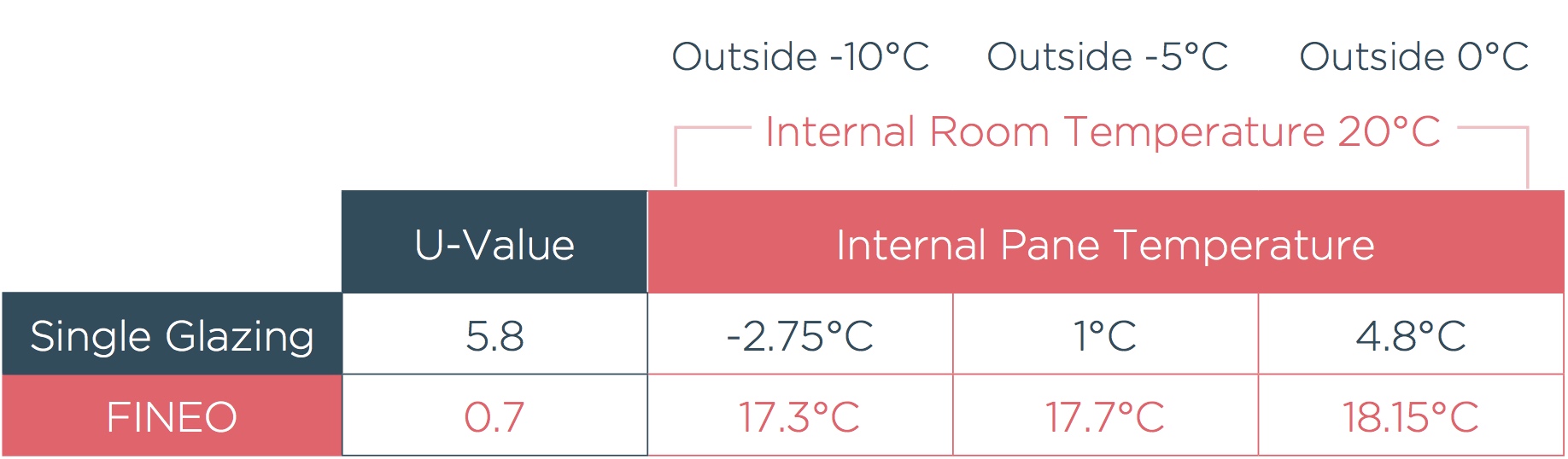
The temperature of the inside face of the glass is what you feel sitting next to a window. On a cold night the inside of a single pane is barely above freezing; the inside of a vacuum unit stays within a couple of degrees of the room.
| Glass | U-value (W/m²K) | Outside | Room | Inside face of the glass |
|---|---|---|---|---|
| Single glazing | 5.8 | −5 °C | 20 °C | 1 °C |
| Vacuum insulated glazing | 0.7 | −5 °C | 20 °C | 17.7 °C |
At −10 °C outside the single pane drops below freezing on the inside (about −3 °C) while the vacuum unit holds around 17 °C. That difference is also why condensation on the glass, and the paint failure that follows it, largely stops after reglazing.

Where the glass comes from
Vacuum insulated glazing is made in Japan, China and, since 2019, Europe. The unit behind the projects shown on this site, FINEO, is manufactured in Belgium and carries a European Technical Assessment through EOTA, the European Organisation for Technical Assessment — the route for products that no harmonised standard yet covers, which is the case for vacuum glass (the double-glazing standard, EN 1279, does not apply to it). Other vacuum units may be used where they suit a window better; the method of fitting them is the same.

Lead time
Every unit is made to the measurements taken at the survey, so nothing is stocked. From production to delivery on site takes approximately four to six weeks. Fitting is scheduled for when the glass has arrived, and the sashes are only taken out on the day they are reglazed.
Vacuum glazing extends the maintenance cycle of the frames
Warm glass on the inside means far less condensation running down onto the bottom rail and sill — the usual starting point for peeling paint and rot on the inside of a sash window. Less damp on the timber means longer between repaints and fewer repairs.
Vacuum insulated glazing compared to other glazing options
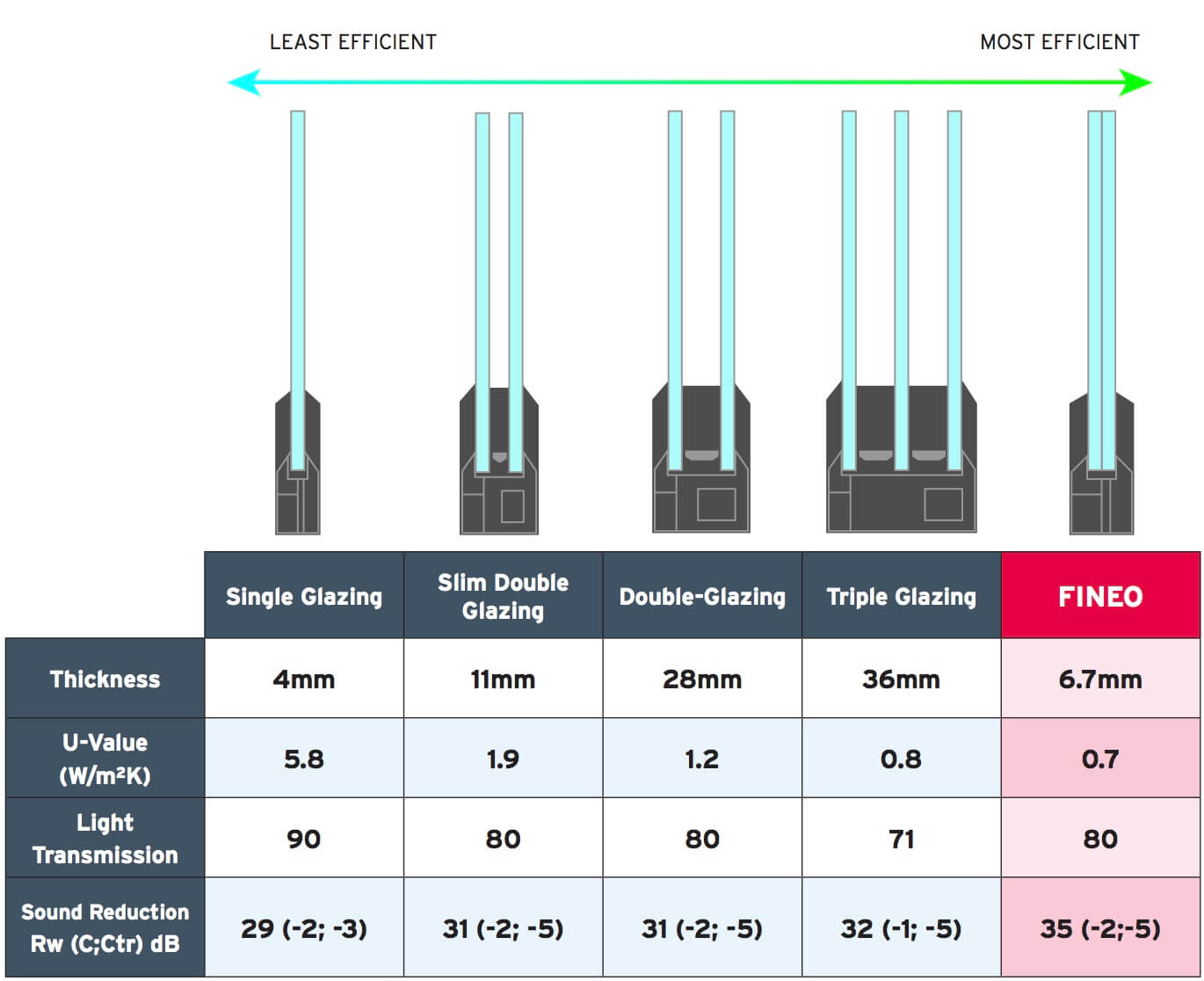
The chart is the case for vacuum glass in one picture: it is thinner than the slim gas-filled units sold for heritage work and insulates better than triple glazing. Light transmission (80%) matches ordinary double glazing, so rooms are not darker after the change. Vacuum vs slim double glazing goes through the trade-offs in detail, including the ones the chart does not show.
Advantages of double glazing with sash window restoration
- Improved thermal and acoustic insulation
- Less noise and less condensation
- Sash window draughts reduced by the seals fitted at the same time
- Lower heating demand
- Water and air sealing at the glass line
- Thermal and acoustic performance comparable to new double-glazed sash windows
- Existing architectural features unaltered
- Interior and exterior appearance preserved
What it looks like up close
Honesty about the one thing you can see: a vacuum unit is held apart by a grid of support pillars, each well under a millimetre across and about 20 mm apart. Against a bright sky, from a foot away, you can pick them out as faint dots. From a normal distance, and from outside, they are invisible. Reflections are a touch stronger than a single pane, as with any two-pane unit.
What you will not see: a spacer bar around the edge (the unit's edge seal is a few millimetres wide and sits in the rebate under the putty), a change in the glazing bars, or a step in the putty line. Owners of listed houses usually ask for a sample to show the conservation officer; it settles the question quickly.
REQUEST A QUOTE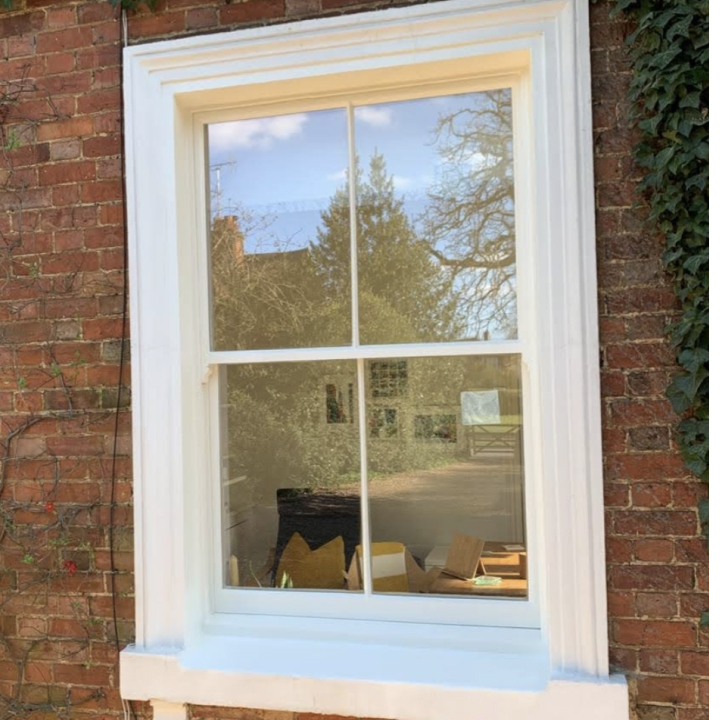
FAQ
What does a U-value mean?
The U-value is the rate at which heat passes through the glass, in watts per square metre per degree of temperature difference. Lower is better. Single glazing is around 5.7–5.8 W/m²K; a vacuum insulated glazing unit is around 0.7 W/m²K (manufacturers’ centre-of-glass figures). Both numbers describe the glass itself, not the whole window with its frame.
Will the window look different?
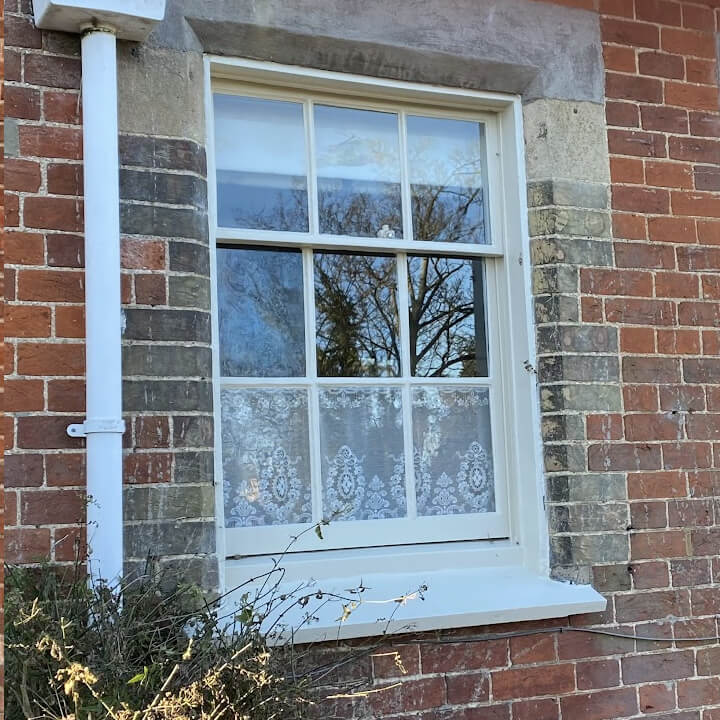
Not from a normal viewing distance. The glazing bars, sightlines and putty finish are kept, and the unit is thin enough to sit in a deepened version of the original rebate. Up close, a vacuum unit has a grid of tiny support pillars (each well under a millimetre across, roughly 20 mm apart) that hold the two panes apart; you can find them if you look for them against a bright sky. Reflections are slightly stronger than single glass, as with any double glazing.
Can I install vacuum double glazing in a Grade II listed property?
Often, but it is a case-by-case decision for the conservation officer, and reglazing a listed window normally needs listed building consent because it alters the building’s fabric. Historic England’s guidance treats slim and vacuum glazing in existing frames as something that can be acceptable where the sightlines, glazing bars and putty finish are kept. We can supply drawings and a sample for the application, but we do not promise consent. See listed buildings & conservation areas.
Can vacuum double glazing be toughened?
Some manufacturers make tempered vacuum units. The units normally fitted are annealed glass; where safety glazing is required — glass close to floor level or beside a door — we discuss the options at the survey rather than assume.
What is the thinnest double glazing?
Vacuum insulated glazing, at roughly 6–8 mm overall depending on the maker (6.7 mm for the unit in the comparison chart on the slimline page). Slim gas-filled units are around 11 mm and standard double glazing 24–28 mm. Thickness is what decides whether a unit can go into an original sash without rebuilding it.
Does the vacuum last?
Manufacturers publish long service-life figures for vacuum units and back them with warranties; independent, long-term field data at scale is still limited because the product is comparatively new in the UK. Ask for the manufacturer’s warranty terms in writing with your quote and keep them with the paperwork.
More in the full FAQ, including aftercare.
Request a quote
Send us the number of windows, their style and your postcode and we will come back to you with the next step — usually a survey visit.